Weaving Activites for Kindergarteners: Fun Crafts That Build Big Skills
Weaving is one of those timeless crafts that looks impressive but is surprisingly simple to introduce to young children. For kindergarteners, weaving activities aren't just fun. They're a powerful way to develop fine motor skills, strengthen hand-eye coordination, build patience, and learn about pattern and sequencing. Best of all, the finished product makes kids feel genuinely proud and accomplished of what they created.
Why Weaving is Perfect for Kindergarteners
Before diving into activities, it's worth understanding why weaving works so well for this age group. Kindergarteners are at a prime developmental stage for hands-on learning. Their fingers are growing more coordinated every day, and they need activities that challenge that coordination.
Here's what weaving builds in young learners:
- Fine Motor Skills: Threading yarn through holes or weaving strips through slits requires precise finger movements that strengthen the small muscles in the hands and wrists. These are the same muscles children use to hold a pencil and write.
- Hand-Eye Coordination: Following a pattern, guiding a needle, or tracking a strip through a mat requires kids to coordinate what they see with what they do. A foundational skill for reading and writing.
- Pattern Recognition & Early Math: Over-under, under-over. Weaving naturally introduces the concept of patterns, which is a core kindergarten math skill. Kids begin to predict what comes next and start understanding sequencing.
- Focus & Patience: Weaving isn't instant gratification, it's a process. Completing a weaving project teaches children to stick with a task and experience the reward of finishing something they worked hard on.
- Creativity & Self-Expression: Choosing colors, creating their own patterns, and personalizing their work gives children a sense of ownership and pride.
Getting Started: What Do Kindergarteners Need For Weaving?
The good news is that kindergarten-friendly weaving requires very little setup. Here are the basics:
- A loom, mat, or card: See ideas below but note that these can be as simple as hole-punched poster or as complex as a real, mini loom!
- Yarn, string, or paper strips
- Child-safe needles: We recommend plastic alongside a discussion on how to be safe when using anything pointy.
- Patience and enthusiasm!
The key to success with this age group is choosing projects that are structured enough to guide them, but open-ended enough to spark creativity. That's exactly what the Roylco products below are designed for!
4 Roylco Products Perfect for Kindergarten Weaving🧶
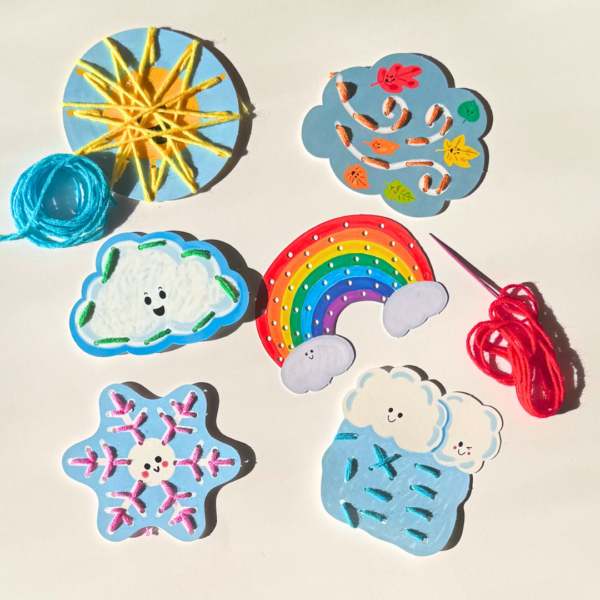
1. Take-Home Weather Lacing Cards
These charming cards are a wonderful entry point for children who are brand new to lacing and weaving. The set features six cheerful weather-themed designs. Each design is printed on sturdy, sustainable cardstock and pre-punched for an easy grab-and-go classroom activity.
Why kindergartners love it: The weather theme connects beautifully to classroom science units and daily calendar routines.
What it builds: Fine motor skills, hand-eye coordination, and early pattern awareness. It also introduces the concept of sewing in a safe and approachable way.
Great for: Classroom art centers, take-home craft bags, rainy day activities, or pairing in with a weather unit in science.
Craft idea: After your students have completed their lacing cards, have them arrange them into a "weather wall" to display and narrate what kind of weather each card shows.
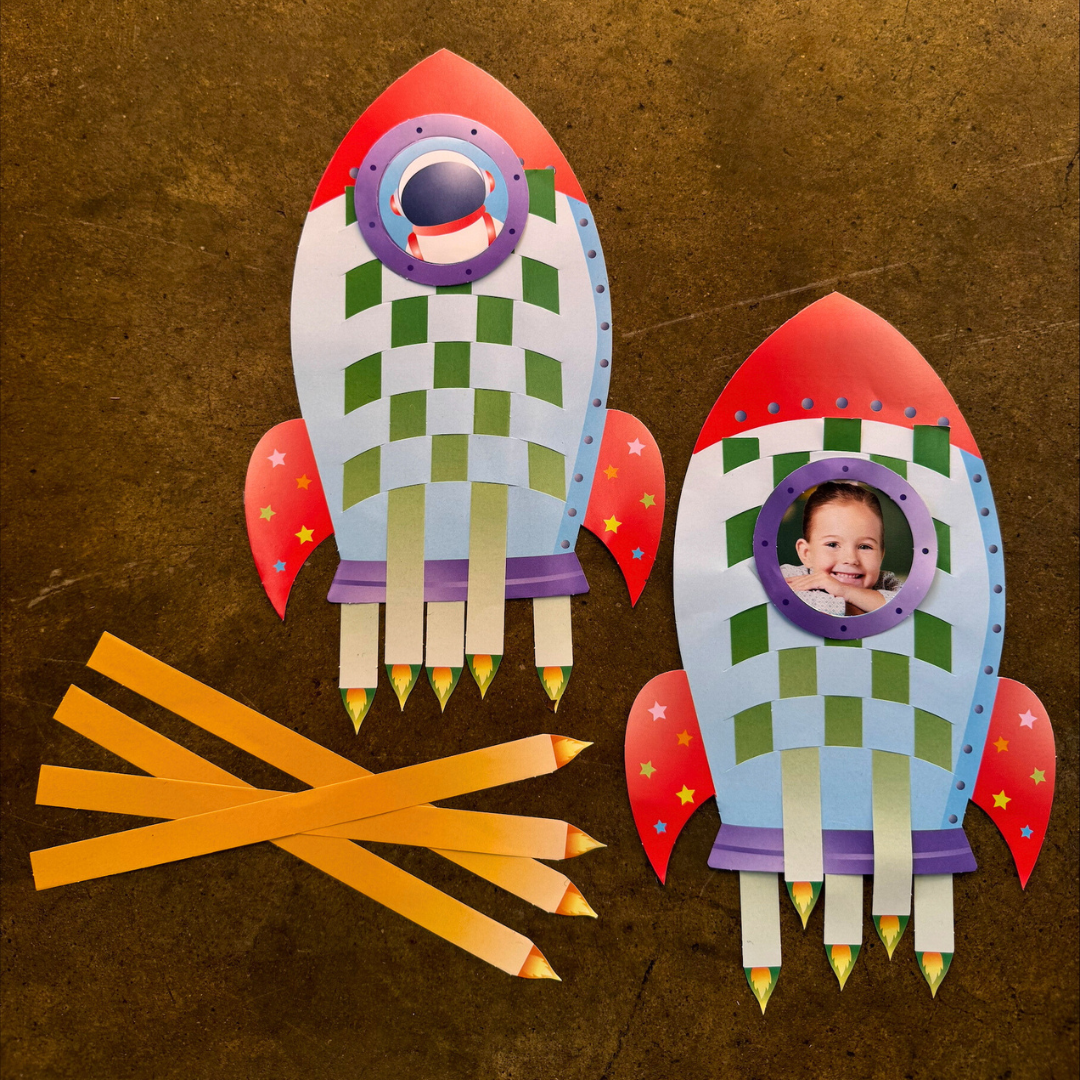
2. Rocket Ship Weaving Mats
This one is a crowd-pleaser, especially for kids who are into space and adventure! Children weave colorful paper strips through pre-cut slits in a rocket ship mat to fill in the body of the rocket. Once completed, they can pop out the rocket, glue a picture of themselves into the astronaut porthole, and admire their out of this world creation!
Why kindergartners love it: The space theme is irresistible. Personalizing it with their picture adds that special one-of-a-kind touch.
What it builds: Fine motor skills, pattern recognition, STEM connections, creativity, and imaginative play.
Great for: Space-themed units, STEAM lessons, end-of-year projects, or any time you want a craft that adds a little something special to your classroom!
Craft idea: Turn this finished rocket ship into a classroom wall display of outer space. Decorate a wall or section in your classroom with our Outer Space Paper and encourage students to go up and stick on their rocket ships. A craft that is truly out of this world!

3. Take-Home Weaving Flowers
These flower-shaped looms are as delightful as they sound. Children weave colorful yarn or string around the petals and through the center hole using flexible, easy-to-thread needles.
What it builds: Fine motor skills, creativity, focus, and the joy of making something meaningful to give as a gift.
Great for: Mother's Day projects, spring-themed classroom units, Valentine's Day gifts, or anytime you want kids to create something they'll be excited to bring home.
Craft idea: Allow children to pick their favorite color flowers and yarn. Once finished, pass out green pipes "stems" and glue them onto the back of the completed flower. Once dried, bend the pipe so they are able to stand on the desk, making for a beautiful array of flowers for your students to enjoy!
4. African Weaving Mats
These flower-shaped looms are as delightful as they sound. Children weave colorful yarn or string around the petals and through the center hole using flexible, easy-to-thread needles.
What it builds: Fine motor skills, pattern recognition, creativity, and social science exploration.
Great for: Multicultural education units, social studies tie-ins, animal or African themed classroom themes, or any time you want a weaving project with rich cultural context.
Craft idea: Pair this activity with a short read-aloud about African animals or the Ashanti people. After weaving, invite each child to share one fact they learned about the animal on their mat. Display the finished mats together as a classroom "safari wall" and celebrate the cultural heritage behind each design!

Tips for Teaching Weaving in Kindergarten
If this is your first time introducing weaving to young children, here are a few classroom-tested tips to make it go smoothy:
Model first, then release. Before students touch materials, do a slow, step-by-step demonstration. Repetition helps them internalize the pattern before their fingers try it.
Use visual anchors. Consider color-coding the "over" and "under" move with a chart on the wall. Some children will find it helpful to see the pattern visually.
Start simple! Begin with lacing cards before moving to looms or mats. Getting comfortable with the basic motion of threading will help build confidence in students that they will need with more complex projects.
Keep yarn lengths manageable. Cut yarn into shorter lengths so it doesn't tangle as children work. Tangled yarn is one of the biggest frustration points for young weavers!
Celebrate process over perfection. Weaving doesn't have to be perfect to be beautiful. Encourage children to appreciate each of their unique creations, even if the pattern isn't perfect.
Start Weaving Today!🪡
Not all craft supplies are created equal, especially when you're working with five and six year old's. Roylco's weaving products are designed specifically with young learners in mind - which means you can expect durable materials, child-safe tools, and classroom-ready quantities. What sets Roylco apart is that their products aren't just craft kits, they're educational tools that teachers and parents can trust. When you shop Roylco, you get the craft idea and the supplies all in one place!
Ready to bring weaving into your classroom or home? Browse our full collection of weaving supplies below!🧶
