Sensory Activities to Support Development in the Classroom
You’ve noticed it. A student who can’t settle. Another who shuts down the moment the room gets loud. A child who needs to touch everything, or refuses to touch anything. Since schools reopened, many teachers report that sensory needs in the classroom feel more intense and more widespread than ever before.
The good news: small, intentional additions to your classroom environment can make a meaningful difference. Roylco’s Sensory-Friendly Product Line was built exactly for moments like these. Hands-on, classroom-tested tools that support sensory development at every stage.
What Post-Pandemic Classrooms Are Telling Us
Children who spent critical developmental years at home, away from classrooms, playgrounds, and group settings — missed many of the everyday sensory experiences that build self-regulation. Touching different materials, navigating crowded spaces, managing group transitions: these are skills that develop through exposure.
Many kids are now playing catch-up. Teachers are seeing more frequent meltdowns, more difficulty focusing, and more children who are struggling to identify and communicate their feelings. It isn’t a discipline problem. It’s a developmental gap - and it responds well to consistent, hands-on sensory support.
Why Sensory Play Matters for Development
Sensory play isn't just about keeping hands busy. When children engage with different textures, weights, and materials, they're building neural pathways that support attention, emotional regulation, and even language development. Proprioceptive input: the deep pressure and resistance that comes from squeezing, pushing, and pulling is especially grounding for children who feel dysregulated.
Effective sensory tools share a few qualities: they're tactile, they invite interaction without pressure, and they work quietly in the background - at a center, during transitions, or as a calm-down option. The best classroom sensory tools are also easy to manage and durable enough for daily use.
Hands-On Sensory Activities for the Classroom
Here are five sensory-friendly Roylco products that work hard in a classroom setting — and are designed to meet children where they are.
Create and Play Sensory Beads (R20204)
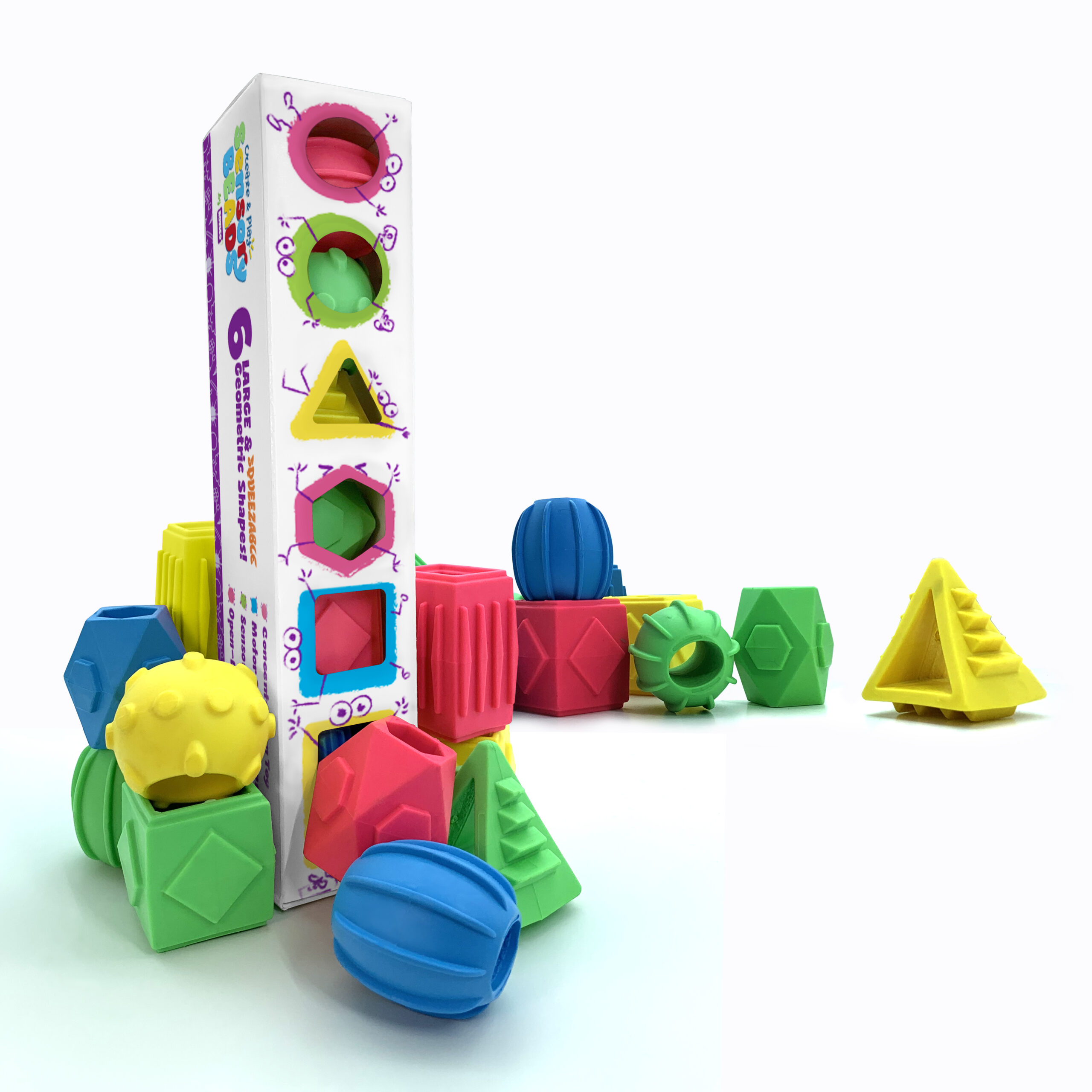
The Create and Play Sensory Beads are soft, flexible, and shaped into six geometric forms - each covered in raised bumps, ridges, and grooves. Students can squeeze them, sort them, string them, or press them into clay. The tactile input is grounding and calming, and the activity is open-ended enough to work for a wide range of ages and ability levels. These are ideal as a quiet fidget option during circle time or as a calm-down center staple.
STEAM Sensory Bin (R20307)
For a more immersive option, the STEAM Sensory Bin uses the same squeezable material as sensory beads - but as a bin filler for a full-hand exploration. Digging, sifting, and arranging materials in a sensory bin gives children the proprioceptive input that helps them feel settled and focused. It's also easy to clean, which matters at the end of a full school day.
Colored Rice (R2114)
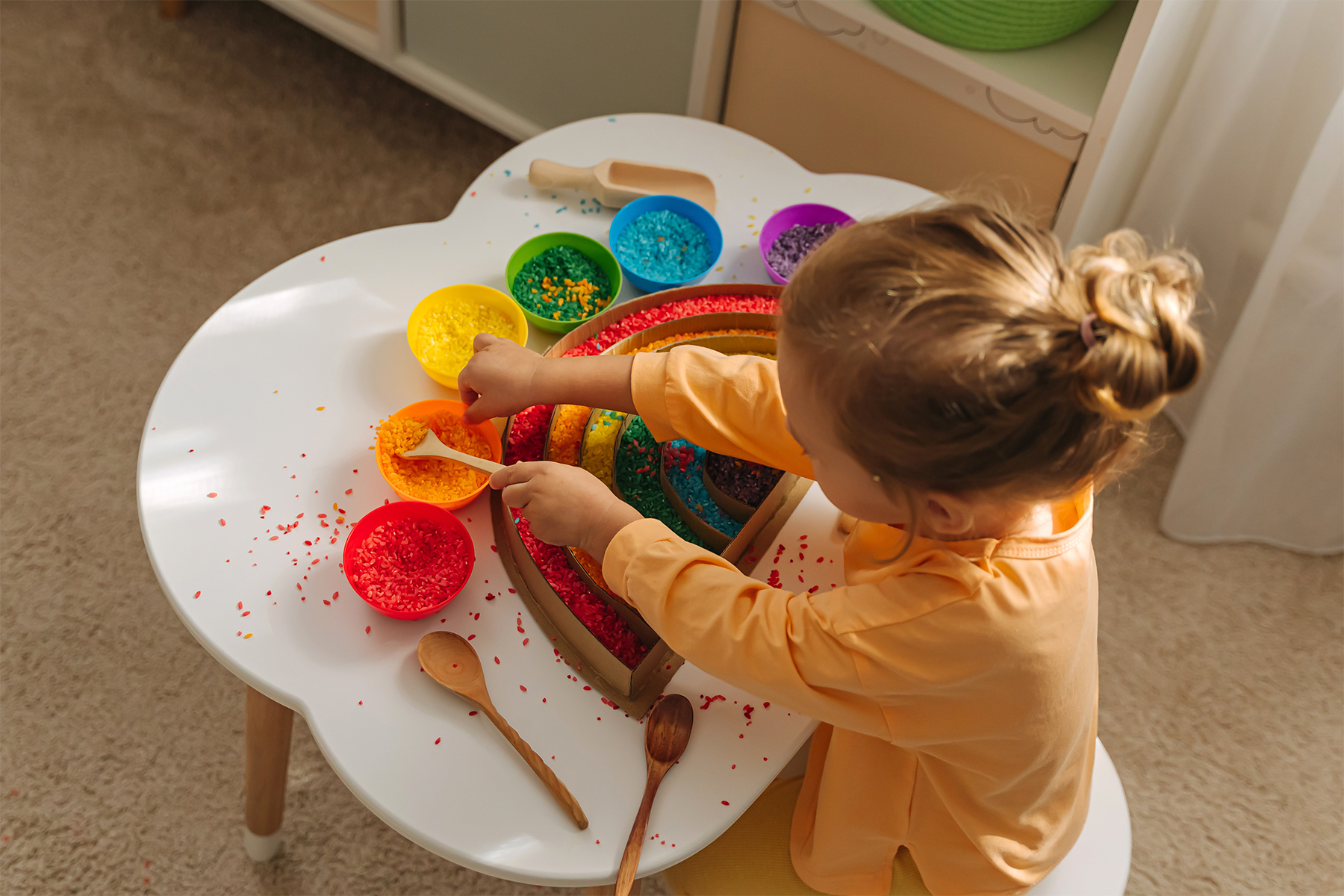
An easy and affordable sensory bin upgrade, Colored Rice adds a burst of color and visual interest to any sensory table or tray. Little hands love feeling the smooth grains while exploring color, texture, and movement - all at once. Made in the USA, it works beautifully layered into sensory bins, used for scoop-and-pour play, or incorporated into art projects with glue. It's a simple addition that transforms a basic sensory station into a multi-sensory experience.
Fancy Stringing Rings (R2183)
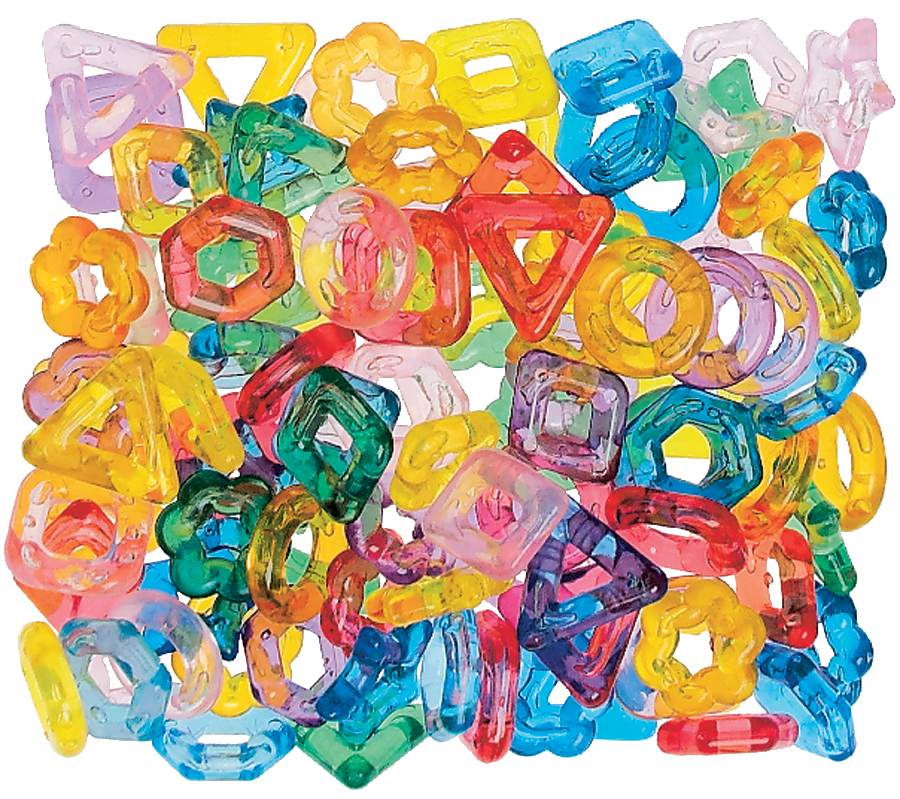
The Fancy Stringing Rings offer a quieter sensory outlet that's easy to set up and clean. Threading small colorful rings onto a string requires focused hand movements and sustained attention - both of which support self-regulation. Made in the USA and age appropriate for ages 4 and up, they work well at a calm-down center or during a mindful activity break.
Mindfulness Pebbles (R20300)
The Mindfulness Pebbles are a set of eight smooth, translucent light-learning rocks in assorted shapes and colors. Children can hold, sort, stack, and trace them. The smooth edges provide a calming tactile experience that supports focus and concentration. Made in the USA, they work beautifully at a calm-down corner, a light table station, or tucked into a mindfulness moment during the day. Each set includes a mindfulness activity suggestion card to help teachers integrate them easily.
Simple Ways to Bring Sensory Support into Your Day
You don't need to redesign your classroom to make this work. A few intentional choices go a long way:
- Create a calm-down corner with a sensory bin or tray of Colored Rice, a set of Sensory Beads, and Mindfulness Pebbles. Label it clearly and teach students to use it independently.
- Use Stringing Rings or Sensory Beads during morning meeting or circle times as a quiet fidget option.
- Layer Colored Rice into your STEAM Sensory Bin for a richer, more visually stimulating exploration experience.
- Pair Mindfulness Pebbles with a feelings check in. After a quiet moment holding and sorting the pebbles, ask: "How does your body feel now?"
- For homeschool families, a small sensory tray on the kitchen table - stocked with Colored Rice and Sensory Beads - can serve the same purpose as a classroom calm-down center.
Meeting Kids Where They Are:
Post-pandemic classrooms look different than they did before. The children in them are different, too - not worse, just changed by what they experienced. They need environments that acknowledge that.
Sensory tools aren't extras. For many students, they're what make the rest of the school day possible. And with the right products in place, teachers can offer that support without overhauling their entire classroom setup.
Explore the full Roylco Sensory Collection Here to find tools built for real classrooms and real kids.
FAQ Section
- Why are sensory needs more common in classrooms since the pandemic? Children who spent developmental years at home missed everyday sensory experiences that schools naturally provide. Navigating crowded hallways, handling different materials, managing group transitions. These repeated exposures are how kids build self-regulation. Without them, many children are now playing catch-up, which shows up in the classroom as difficulty focusing, frequent meltdowns, or trouble transitioning between activities. It's a developmental gap, not a behavior problem.
- What kinds of sensory tools work best in a classroom setting? The most effective classroom sensory tools are tactile, open-ended, and low maintenance. Products like squeezable sensory beads, sensory bin fillers such as colored rice, and smooth objects like mindfulness pebbles give children meaningful sensory input without requiring a lot of teacher supervision. The key is that they work quietly - at a calm-down corner, during transitions, or as a morning meeting fidget. They support the child without disrupting the rest of the classroom.
- How do I introduce sensory tools to my classroom without it feeling overwhelming? Start small. A single calm-down corner stocked with two or three items - a sensory bin, a set of sensory beads, and a few mindfulness pebbles - is enough to make a real difference. Teach students how to use the space independently, and use a simple sign-out system if needed. Once children know the routine, sensory tools become self-directed, which actually reduces demands on the teacher while giving students a reliable way to reset and refocus.